
Detect. Interrogate. Act.
Chart your next move in Leptomeningeal Metastases with CSF testing that provides accurate, multidimensional data and insights
CNSide® delivers actionable insights from a single cerebrospinal fluid test sample so you have more complete data to guide decisions for your patients with Leptomeningeal Metastases
CNSide® is a proprietary, highly sensitive, CSF Assay Platform with tests performed in a CLIA-certified, CAP-accredited laboratory that represents a significant advancement in helping healthcare providers better manage Leptomeningeal Metastases and other conditions.
CNSide® provides a broader, more accurate range of data and insights that inform detection, qualitative analysis, molecular characterization, and treatment effect monitoring.1

Tumor Cell Enumeration (TCE)
to detect and quantify tumor cells in CSF of Leptomeningeal Metastases patients that enables diagnosis and treatment monitoring2

Fluorescence In Situ Hybridization (FISH)*

Immunocytochemistry (ICC)*

Next-Generation Sequencing (NGS)*
* Available in H2 2026 (estimated). TCE is available to order now.
Our multiplex assay platform yields accurate and comprehensive data2
The CNSide® CSF Assay Platform identifies, enumerates, and examines tumor cells in the CSF test sample, using a multi-antibody cell capture to determine their number and properties. This provides data that empower clinicians to confirm or rule out LM with unparalleled accuracy, and offers the opportunity to monitor disease progression and treatment response through serial testing.
CNSide® by the Numbers

Actionable Insights from a Single CSF Sample
CNSide® offers clinicians and physicians an advanced tumor cell capture assay that is useful for multiple tumor types and capable of extracting the breadth of information available in the circulating tumor cells present in cerebrospinal fluid.
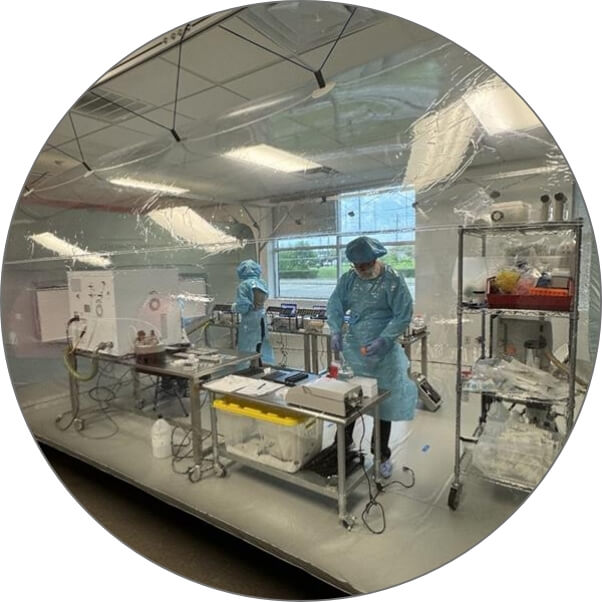
Our Technology
Primary commercial offering is a unique clinically relevant dataset for physicians, primarily neurologists and oncologists. Below is a visual look at the steps from your physician to our lab.

Put our proprietary technology, manufactured in-house, to work for you
1. CEE-Sure® CSF Collection Test Tube: Preserves collected CSF specimens from lumbar puncture or Ommaya Reservoir.
- Easy workflow integration: room-temperature shipment & processing
- Simplified logistics: no cold pack or refrigeration
- Reduced variability: up to 4-day stability
2. Microfluidic Chip: Cell capture for tumor cell enumeration
3. Cell Interrogation Probe Cocktail: Cell capture for tumor cell interrogation
CNSide® provides data reports with pathologist interpretation of findings with each ordered test
A. Tumor Cell Enumeration (TCE): Quantifies tumor cell count
B. Tumor Cell Interrogation (TCI): Identifies gene expression, guides treatment
C. Cell Free DNA Analytics: Detected clinically relevant mutations
The CNSide® Step-by-Step Process

Unlock the Power of CNSide®
Find a Provider Who Offers CNSide®
Northwestern Medicine - Chicago
675 N St Clair St SUITE 20-100, Chicago, IL 606115975, USA
New York University Langone Health
530 1st Ave 10W, New York, NY 10061
(646) 929-7800
Dr. Jonathan Yang
Dr. Alexandra Gewirtz
Stanford Medicine
875 Blake Wilbur Dr. Clinic D MC 6510, Stanford, CA 94305
(650) 723-4000
Dr. Seema Nagpal
Dr. Lawrence Recht
Dr. Toni Cao
Dr. David Rogawski
Dr. Kate Therkelsen
UT Health San Antonio
7979 Wurzbach Rd. 4th Floor, San Antonio, TX 78229
(210) 567-7000
Dr. Andrew Brenner
Yale Medicine
5520 Park Ave, Trumbull, CT 06611
(203) 502-8400
Dr. Nicholas Blondin
Asthra Health
2811 Wilshire Blvd #790, Santa Monica, CA 90403, USA
(310) 870-7260
Dr. Santosh Kesari
Inova Cancer Center
8081 Innovation Park Dr, Fairfax, VA 22031, USA
(571) 472-4724
Dr. Meaghan Roy - O'Reilly
Dr. Catherine Wood
Dr. Adam Cohen
Louisiana State University Health
433 Bolivar St, New Orleans, LA 701127021, USA
(504) 568-4808
Dr. Yazmin Odia
Mayo Clinic - Arizona
5777 E Mayo Blvd, Phoenix, AZ 85054, USA
(480) 342-2000
Dr. Shannon Ensign
Northwestern Medicine - Warrenville
4405 Weaver Pkwy, Warrenville, IL 60555, USA
(630) 352-5450
Dr. Robin Buerki
Sutter Health
1580 Valencia St Floor 6, San Francisco, CA 94110, USA
(415) 641-6566
Dr. Sharma Akansksha
Texas Oncology - Houston Medical Center
1350 First Colony Blvd, Sugar Land, TX 77479
(713) 795-0202
Dr. Maria Morales
UC San Diego Health
3855 Health Sciences Drive, La Jolla, CA 92093
(858) 657-8737
Dr. David Piccioni
UH Seidman Cancer Center
11100 Euclid Ave, Cleveland, OH 44106, USA
(216) 844-1000
Dr. Li Yi
UPMC
5150 Centre Ave, Pittsburgh, PA 15232
(412) 648-9891
Dr. Jan Drappatz
Capital Health
1 Capital Way, Pennington, NJ 08534, USA
(800) 637-2374
Dr. David Redjal
Houston Methodist
6565 Fannin St, Houston, TX 77030, USA
(713) 790-3311
Dr. Michael Youssef
MedStar Georgetown University
3800 Reservoir Rd NW, Washington, DC 20007, USA
(202) 444-2000
Providence St. Jude
2151 N Harbor Blvd Ste 3100 Fullerton, CA 92835
(714) 446-5830
Dr. Jose Carrillo
Expect more from your cerebrospinal fluid analysis
Clinical Trials, Case Studies, and Real-World Analyses
Multiple trials and studies using CNSide® CSF Assay Platform demonstrate its superiority over standard of care and traditional CSF cytology. Explore the clinical evidence.
Clinical Trials
CSF Tumor Cell (CSF-TC) Detection, Quantification and Biomarker Assessment Helps in Clinical Management of Breast Cancer and Non-Small Cell Lung Cancer Patients Having Leptomeningeal Disease (FORESEE Clinical Trial)
Primary investigator: Kumthekar P

A multi-center clinical utility study assessing the impact of the CNSide® CSF assay platform on disease management of patients with leptomeningeal disease.
The study enrolled 39 patients with breast (21 patients) or non-small cell lung cancer (18 patients) with a suspected or confirmed diagnosis of LM.

- Primary endpoint assessed how CNSide® test results influenced clinical decision making
- Secondary endpoints assessed CNSide® vs the gold standard of LM diagnosis, CSF cytology, and its use for personalization of treatment selection based on tumor molecular phenotype

- CNSide® influenced treatment decisions in over 90% of cases, surpassing the 20% primary endpoint target
- CNSide® demonstrated enhanced sensitivity in detecting tumor cells (80%) vs cytology (29%)
- CNSide® identified actionable DNA mutations in the CSF, such as HER2 amplification, influencing 24% of therapeutic selection decisions
- CNSide® exhibited high specificity, with no tumor cells detected in patients without LM
Case studIES
A Microfluidic, Multi-Antibody Cell Capture Method to Evaluate Tumor Cells in Cerebrospinal Fluid in Patients with Suspected Leptomeningeal Metastases
Authors: Sweed NT et al. Arch Pathol Lab Med, 2024
Artificial CSF solution was spiked with 34 different human carcinoma cell lines at varying concentrations, and CNSide® was used to detect and identify those tumor cells.
- Determine cell detection efficiency by the CNSide® platform at different assay conditions
- Determine tumor cell detection in CSF specimens derived from 65 patients having different solid types of cancer (carcinomas) with either a suspected/confirmed or negative diagnosis of LMD
Among contrived samples:
- Average tumor cell capture ranged from 50% to 82% (261 of 522; 436 of 531), and coefficients of variation ranged from 7% to 67%
- CNSide® cell capture assay demonstrated a sensitivity of 92% and a specificity of 95% among clinical samples
Keeping a Track on Leptomeningeal Disease in Non-Small Cell Lung Cancer: A Single-Institution Experience With CNSide®
Authors: Puri S. et al. Neuro-Oncology Advances, 2023
A retrospective single institution analysis performed to assess how CNSide®, in conjunction with Standard of Care methods, was used to manage LMD in patients with advanced non-small cell lung cancer (NSCLC).
- Use of CNSide® in CSF tumor cell enumeration and detection of specific genetic alterations.
- Tumor cell detection and sensitivity of CNSide® and cytology in parallel
- Improved CSF tumor cell detection in NSCLC patients with LMD (N=25 samples; N=12 patients)
- CSF tumor cell numbers measured by CNSide® tracked clinical response to treatment
- CNSide® detected actionable biomarkers in 75% of samples (N=12 patients)
Longitudinal CSF Tumor Cell Enumeration and Mutational Analysis as a Driver for Leptomeningeal Disease Management
Authors: Tripathy A. et al. Cancers, 2025.
This study describes the large-scale utilization of the highly sensitive, CNSide® CSF Assay Platform (tumor cell enumeration, FISH, ICC, NGS) in a longitudinal analysis of LM patients across multiple sites.
- Utility of CNSide® in CSF tumor cell detection
- Impact of longitudinal CSF-TC enumeration and FISH/ICC/NGS analysis on clinical course
- Mutational status of CSF tumor cells over time
- CSF tumor cells detected in 55% of primary, 74% of subsequent, and 67% of total CSF draws. In the 96 cases of suspected LM in which Primary CSF draws did not detect tumor cells, patients did not undergo further testing, suggesting CNSide® was used as a final determinant of LM absence.
- Of the 66 patients who underwent 2 or more CSF draws, 20 (30%) had at least 1 longitudinal change in marker detection (“flip”) among their ordered biomarkers
Real-world analyses
The HER2 flip-HER2 Amplification of Tumor Cells in the CSF of Breast Cancer Patients with Leptomeningeal Disease: Implications for Treating the LM Tumor with Anti-HER2 Therapy
Authors: Kumthekar P. et al. Frontiers in Oncology, 2024
This retrospective multiple institutional chart review was conducted to characterize the HER2 status of LMD in patients with breast cancer as measured by the CNSide® FISH HER2 test.
- HER2 Status detection in CSF Tumor Cells of breast cancer patients with LMD
- HER2 Status change throughout treatment
- Improved CSF tumor cell detection with CNSide® in breast cancer patients with LMD (N=26 patients)
- 35% (9/26) of breast cancer patients with LMD showed HER2 amplification on CSF tumor cells, but had a HER2 negative primary tumor
- HER2 Status can change throughout treatment
Prognostic Value of Cerebrospinal Fluid Tumor Cell Count in Leptomeningeal Disease from Solid Tumors
Authors: Barbour AB et al. J Neurooncol, 2024
A retrospective cohort study of 31 patients with newly diagnosed or previously treated LMD from a single institution who had CNSide® assay testing for CSF-TCs from 2020 to 2023
- Determine the prognostic value of CSF tumor cell numbers detected by CNSide®
- Determine density of CSF tumor cells in cytology positive samples vs. cytology negative as measured by CNSide®
- CSF-TCs were detected in 29 cases by CNSide® (sensitivity = 93.5%, NPV = 85.7%, specificity = 100%)
- CSF cytology was positive in only 16 of those 29 patients (55%) that were LMD-positive with CNSide®.
Comparative Evaluation of the Diagnostic and Prognostic Performance of CNSide® Versus Standard Cytology for Leptomeningeal Disease
Authors: Appel H et al. Neurooncol Adv, 2024
A retrospective real-world analysis comparing CNSide® vs cytology in a mixed population (N=82; breast [45%], lung [41%]) who met European Association of Neuro-Oncology (EANO) criteria for possible/probable/confirmed LM.
- Diagnostic yield of CNSide® vs cytology among patients with a possible, probable or confirmed LMD diagnosis per EANO criteria
- Prognostic yield of CNSide® compared to cytology in LMD patients having different types of carcinomas and a positive LMD diagnosis
- CNSide® reported higher sensitivity compared with cytology
- CNSide® identified an additional 13 cases not detected by cytology for a total of 46 out of 82 cases (43.9%), increasing the diagnostic yield by 56.5%
- Five patients were tumor cell negative by both cytology and CNSide®
- Among the 19 EANO probable cases, CNSide® was positive for 7 (37%) vs 0% for cytology
- Among the 40 EANO possible cases, CNSide® testing was positive for 34 (84%) vs 0% for cytology
Diagnosis of Leptomeningeal Metastasis in Women With Breast Cancer Through Identification of Tumor Cells in Cerebrospinal Fluid Using the CNSide® Assay
Authors: Wooster M. et al. Clin Breast Cancer, 2022
A prospective study performed at a single institution to compare CNSide® with standard cytology in diagnosing LMD in patients with metastatic breast cancer.
- LMD diagnostic utility
- CSF tumor genetic alteration status
- CNSide® detects tumor cells in the CSF of metastatic LMD patients with high sensitivity and specificity
- CNSide® detects genetic alterations in the CSF that are unique to the LMD tumor
Durable Responses to Trastuzumab Deruxtecan in Patients with Leptomeningeal Metastases from Breast Cancer with Variable HER2 Expression
Author: Rogawski D. et al. J of Neuro-Oncology, 2024
A retrospective study to assess the activity of trastuzumab deruxtecan (T-DXd) in the treatment of leptomeningeal metastases (LM) from various HER2-altered cancers.
- Characterize the activity of T-DXd in the treatment of leptomeningeal metastases (LM) from a range of HER2-altered cancers
- Improved diagnostic yield: 2 patients tested positive for CTCs in CSF by CNSide® who were negative/equivocal by CSF Cytology; 10 of 18 total patients had a diagnosis of confirmed Type I LM
- Given the small number of patients who had CNSide® performed, the data did not reveal a clear correlation between the number of CTCs in the CSF or HER2 amplification and response to T-DXd
Clinical Utility of Circulating Tumor-Cell Based Cerebrospinal Fluid Assay in the Diagnosis and Molecular Analysis of Leptomeningeal Disease in Patients with Advanced Non-Small Cell Lung Cancer
Author: Malhotra, J. et al. JCO Precis Oncol, 2024
A retrospective study to describe a single center's clinical experience in evaluating the use of CSF-derived CTCs for the diagnosis of leptomeningeal disease (LMD) and the detection of genomic alterations in cfDNA.
- 22 patients with NSCLC who had CSF collection as part of routine clinical care for suspsected LMD were included in the study
- CSF was evaluated for CTCs and cfDNA using the CNSide commercial assay and molecular profiling was performed.
- Molecular testing results from sequencing of tumor tissue and plasma circulating tumor DNA were collected.
- cMET and HER2 expression analysis was performed using FISH.
- Detected higher sensitivity to diagnose LMD using CSF CTC-based assay; 38% of LMD cases identified using the assay were missed by standard CSF cytology.
- CSF molecular testing using CSF cfDNA demonstrated high concordance with tissue-based molecular testing.
Stay up to date on the latest news from CNSide® and find answers to common questions about the innovative CSF Assay test platform.
References: 1. Sweed NT, Hsiao H-C, Blouw B, Pircher TJ, et al. A microfluidic, multi-antibody cell capture method to evaluate tumor cells in cerebrospinal fluid in patients with suspected leptomeningeal metastases. Arch Pathol Lab Med. 2025;149(3):242-252. 2. Appel HR, Rubens M, Roy M, Kotecha R, et al. Comparative evaluation of the diagnostic and prognostic performance of CNSide® versus standard cytology for leptomeningeal disease. Neurooncol Adv. 2024;6(1):vdae071. 3. Kumthekar P. CSF tumor cell (CSF-TC) detection, quantification and biomarker assessment helps in clinical management of breast cancer and non-small cell lung cancer patients having leptomeningeal disease (FORESEE Study, NCT05414123). Podium presentation at: 2024 Society for NeuroOncology/American Society for Clinical Oncology CNS Metastases Conference (SNO/ASCO); August 8-10, 2024; Denver, CO.